


Africa is making strides in its visa openness policies, which bodes well for cross-border travel, ease of movement, and trade in 2024 and beyond. The Africa Visa Openness Index 2023, published on Tuesday, reveals much progress since the seventh edition of the report was published in December 2022.
The Visa openness achieved its highest score ever in 2023, surpassing levels last seen prior to the Covid-19 pandemic. The Africa Visa Openness Index (AVOI) measures the extent to which African countries are open to visitors from other African countries.
Over the period 2020-21, massive border closures to curb the spread of COVID-19 affected land and air travel, with additional restrictions due to screening measures, bans on gatherings, quarantines, and such, causing stagnation in 2022.
In 2023, data from the report shows that 50 countries improved or maintained their 2022 score, with only 4 countries scoring lower. Since the first report was published in 2016, 36 countries have improved their score on the index. Forty-two (42) countries extend visa-free entry to citizens from at least 5 other African countries, while 33 countries do so to citizens of at least 10 countries. Four countries – up from three last year – have eliminated all visa requirements for African travelers. They are Rwanda, Benin, The Gambia, and Seychelles.
Despite the many improvements, there are still hurdles to overcome. In nearly half of country-to-country travel scenarios (46%), Africans must obtain visas before departure to travel to other African countries. Visa restrictions are notably pronounced in northern and central Africa. Sustaining the momentum on visa liberalization is crucial for realizing the vision of the ‘Africa We Want.’ Embracing liberal visa policies will facilitate seamless travel and significantly enhance trade in goods and services, cross-border investment, and shared prosperity.
Some of the recommendations include:
- Implementing any outstanding commitments on visa-free movement within regional economic communities,
- Extending visa-free travel policies to all AU member states, in increments if necessary,
- Streamlining and simplifying any remaining visa procedures and associated cross-border processes,
- Implementing and expanding e-visa systems that use secure, reliable, mobile-friendly platforms with a guaranteed response time for countries requiring a visa ahead of travel
One key area for which further progress on visa openness is crucial is the African Continental Free Trade Area(link is external) (AfCFTA). “Freeing the movement of people across Africa’s borders is not only an important objective in its own right, but is also essential to continental integration,” the report notes. With 3 more African Union member states ratifying the AfCFTA in 2023, bringing the total to 47 ratifications, the lasting impact of the negotiations, ratification, and execution of the AfCFTA depends to a significant extent on people’s ability to cross African borders, unhindered by excessive administrative barriers.
“The flourishing of trade in goods is intricately linked to the liberalization of trade in services, both of which hinge on the smooth movement of people across Africa’s borders without excessive bureaucratic hurdles,” said Ambassador Minata Samate Cessouma, Commissioner for Health, Humanitarian Affairs and Social Development at the African Union Commission. “We have never been closer to realizing AfCFTA’s potential to integrate the continent. The African Union is proud of countries’ progress on freeing the movement of people.”
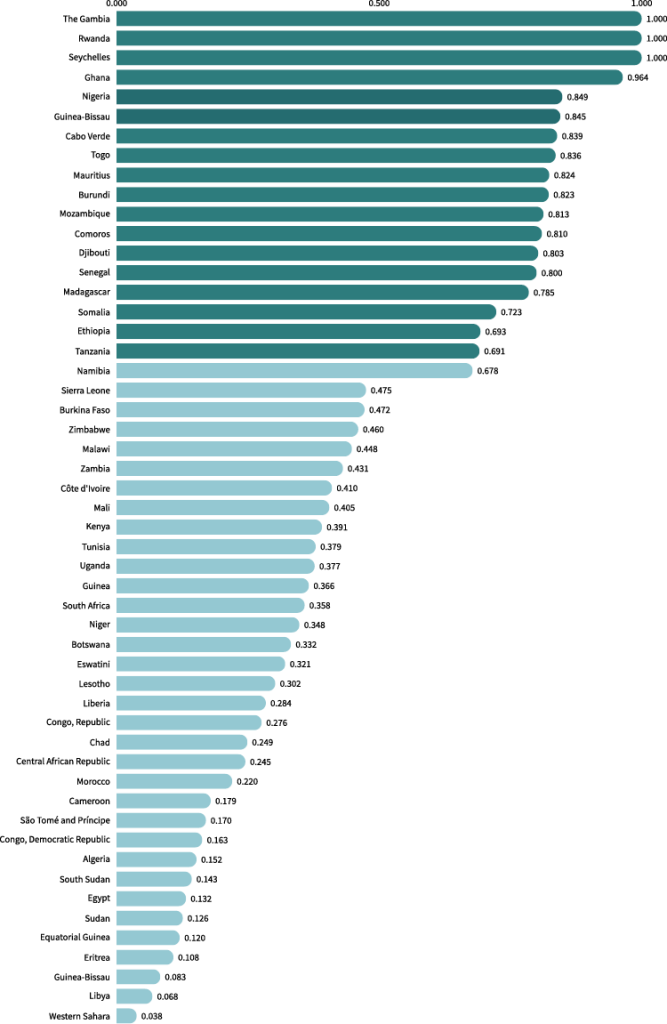
Source: African Development Bank Calculations based on IATA data, July-August 2023