

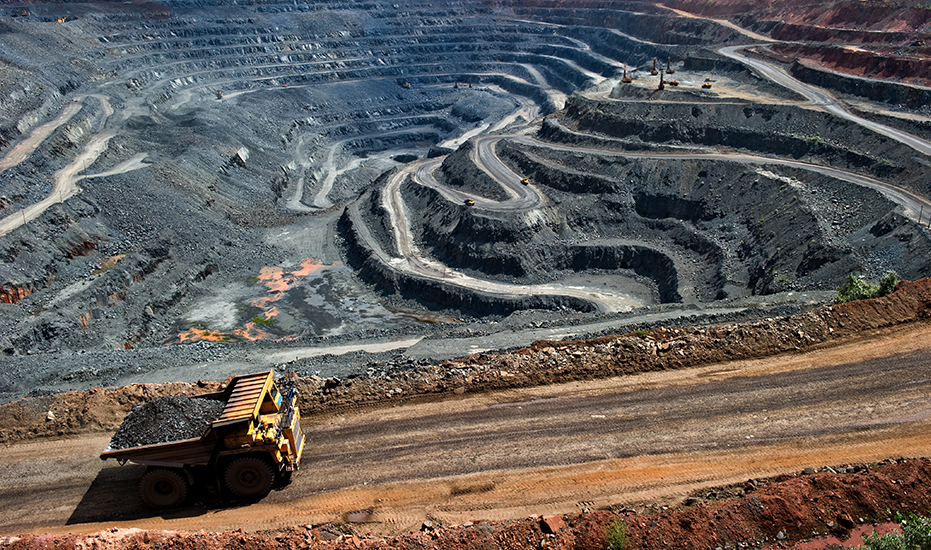
Africa is home to some 30% of the world’s mineral reserves, 8% of the world’s natural gas, and 12% of the world’s oil reserves. The continent has 40% of the world’s gold and up to 90% of its chromium and platinum. The world’s largest reserves of cobalt, diamonds, platinum, and uranium are in Africa. One of the external and domestic factors that have supported nearly two decades of sustained growth in Africa has been the growth of the extractives sector. The super cycle in commodity prices in the extractives sector that began in 2000 was notable on the external side. This enabled the region’s resource-rich countries to grow appreciably faster than non-resource-rich countries. Another consequence of sharply elevated commodity prices has been a boost in the production of extractives and increased investor interest in the region’s abundant natural resources, ranging from hydrocarbons (oil and natural gas) to minerals (gold, diamonds, copper, and iron ore).
Increased investor interest has led to intensified resource exploration, discoveries, and a surge in mines openings. In 2019, the continent produced almost 1 billion tons of minerals worth $406 billion. At $125 billion annually, South Africa generates the most money from its mineral resources. Nigeria comes in second with $53 billion per year, followed by Algeria ($39bn), Angola ($32bn), and Libya ($27bn). In general, the value of the resources sector as a driver for regional socio-economic development is well understood by the region’s nations. As commodity prices continue to rise, initiatives to promote the vast mineral potential of the region abound, and key projects to support improved infrastructure and labor capacity are underway.
Southern Africa has long been considered a regional and global mining powerhouse, particularly South Africa. As of 2023, the industry contributed 7.53 percent to the country’s GDP and employed a total of 477,000 people. However, it has been engulfed by a series of shocks and economic underperformance. This has taken a toll on the country’s position as an extractive industry leader. Johannesburg remains a critical hub for regional operators. Improving conditions in the commodity marketplace bode well for the rest of Southern Africa as investors eagerly look to other jurisdictions that boast the region’s undeniable shared strengths.
According to Statista, in 2023, South Africa’s platinum group metal production amounted to 239.9 metric tons. Platinum group metals include platinum, palladium, rhodium, ruthenium, osmium, and iridium. In 2023, the total revenue of South Africa’s mining industry was 654 billion South African rand (around 34.8 billion U.S. dollars). The mining industry in South Africa has seen a doubling of its industry revenue in the past five years. However, 2023 represents a decrease compared to the previous year, which reported a total of 726 billion South African rand (approximately 38.6 billion U.S. dollars). The leading revenue-generating mineral commodity in South Africa in 2023 was platinum group metals (PGMs), which collectively accounted for 370 billion South African rand in revenue (around 19.7 billion U.S. dollars). South Africa is the world’s largest producer of platinum and platinum, and is a prominent producer of the other PGMs. Gold ranked second, with 92 billion South African rand in revenue (approximately 4.9 billion U.S. dollars).
In addition to the economic challenges the sector faces, South Africa faces the challenges associated with an aging mining sector. Industrial mining has been taking place for around 120 years; subsequently, activities in some areas now reach depths of over 4,000 meters. This presents operational challenges, and the hazards of operating so deeply present significant risks to human life. In South Africa, the potential to have the largest impact is through increasing the amount of productivity in deep underground mines.
In Namibia, TSX-listed Diamond Fields International was granted a renewal for its license to mine within the nation’s 3,700 square miles of marine diamond concessions along its southwest coast. Marine diamonds have surpassed the importance of land diamonds, with production totaling 1.7 million carats from the sea in comparison to 403,000 carats recovered on land. A joint venture between the Government of Namibia and De Beers Group, known as Debmarine Namibia, has commenced construction on a $142 million offshore diamond mining vessel to begin operations in 2021 to unlock the potential for sea diamonds further. Namibia’s economy has generally recovered substantially following a drought that put pressure on its mining and agriculture-dependent economy.
Mozambique holds some of the world’s largest untapped deposits of both thermal and coking coal and has strong potential for graphite that warrants increased attention. Madagascar is another country with significant potential for graphite, with ASX-listed Bass Metals securing a sales agreement for 3,000 million tons per year of its flake graphite concentrate.
Botswana (Diamond) and Zambia (Copper) remain top destinations for investment, while the political developments in Zimbabwe (Platinum) could position the country for great success when economic sanctions are lifted. Despite being a well-established jurisdiction, Zambia’s geology remains widely unmapped, which presents an exploration opportunity.
Lithium and cobalt are some of the key metals used to produce batteries. In 2019, about 63 percent of the world’s cobalt production came from the Democratic Republic of the Congo. Petroleum and coal are among the most abundant minerals for 22 out of Africa’s 54 countries. As of 2019, Nigeria produced most of the continent’s petroleum (25%), followed by Angola (17%) and Algeria (16%).
East and Central Africa have not been immune from the rising tide of protectionism around the globe. Implementing restrictive trade policies in Tanzania has created an uncertain investment environment there. Further jurisdictional uncertainties have impacted investor security in other East African nations like Kenya. Despite this, rebounding prices have played a role in generating interest in this prospective and under-exploited region.
Kenya, a relatively new mining jurisdiction, has launched a gold project with a resource that is believed to surpass 1.3 million ounces of gold. Goldplat’s Kilimapesa mine, the country’s largest gold operation, recently commissioned a new crushing plant, and a highly anticipated airborne survey of Kenya will provide investors with more data. Kenya’s mining sector currently contributes less than 1% of Kenya’s GDP but has the potential capacity to contribute 4% to 10%. This means that much of Kenya’s natural resource wealth is yet to be exploited, and there could be a significant opportunity for growth. On the 24th of June 2022, the Kenya National Chamber of Commerce & Industry (KNCCI) signed a Memorandum of Understanding (MoU) with the Kenya Chamber of Mines (KCM). KCM represents the interests of Kenya’s miners, exploration companies, mineral traders, suppliers, and professionals in the mining industry.
Ethiopia is one of the fastest-growing economies globally and committed to diversifying its economic strategy, which has translated to positive outcomes for miners operating in the region. In Ethiopia, gold and gemstones represent exciting and under-explored potential areas, and its potash mineralization could make waves in the global markets. Potash in the ground of traditional producers like Russia and Canada may not occur until depths of 500+ meters; in Ethiopia’s Danakil Depression, such zones can be found as close to the surface as 50 meters.
West Africa continues to position itself as a noteworthy region for investment in the mining sector. From Ghana’s world-renowned gold deposits to Burkina Faso’s unexplored wealth, West Africa hosts some of the more attractive projects for the industry across the continent. Burkina Faso is experiencing a boom in its mining industry. Land-locked but richly endowed with immense mineral wealth, this country has quietly emerged as one of the preferred destinations for mining investors. Even though the country falls behind gold-producing giants like South Africa, Ghana, and Mali, Burkina Faso has the highest number of new gold projects in the continent. Endeavour Mining recently confirmed it had added over 260,000 oz. of gold to its proved resource at its Karma gold mine, extending its life by more than ten years. Meanwhile, major gold producer IAMGOLD announced the installation of a 15-megawatt solar power plant at its Essakane mine, the world’s largest hybrid diesel solar photovoltaic project.
With an estimated 822 tons of gold reserves, Mali remains a hotspot for gold mining companies worldwide. Due to developments from Randgold’s Loulo-Gounkoto complex and the Morila mine, the country has significantly increased its reserves in the past few years. Although the security situation in the north of the country has overshadowed developments in the industry, Mali’s mining sector has ultimately experienced very eventful years recently.
Well-established mining jurisdictions such as Ghana have upgraded efforts to reap the benefits of increased regional investment flows. Ghana has committed significant resources and efforts to tackling illegal mining and streamlining permitting processes. While Ghana remains a strong favorite of investors, Senegal, Guinea, and Ivory Coast are the newest players to see considerable interest in West Africa. Guinea (Bauxite) is also a country with increased investment in the mining sector. Several explorers and developers, such as Bassari Resources, are gearing up to begin production in Senegal.
Cote d’Ivoire is one of Africa’s fastest-growing economies, with a growth rate averaging above 8% over the past decade. The country is earmarked for future investments in its mineral resources. In particular, Cote d’Ivoire is rich in gold as it sits on the Birimian Greenstone Belt. Over the past two years, the Ivorian government has awarded gold prospecting licenses to various companies to search for gold ore deposits in eastern, northern, and southwestern Cote d’Ivoire. Cote d’Ivoire is Africa’s sixth largest gold producer and 22nd in the world, with a production of 32.4 tons in 2019* compared to 24.5 tons in 2018 (+33%) and a target of 50 tons in 2025 thanks to the future exploitation of several very advanced mining projects. The next step, and one of the objectives of the Ivorian government, is gold industrial processing at source before export.
Mining in Cote d’Ivoire has been growing in the last few years and continues to scale into what will likely be one of the most productive places to mine gold in Africa. Currently, Cote d’Ivoire has seven gold mines in operation, four for manganese, one for bauxite, and one for nickel/copper, and half a dozen more gold mines in the pipeline, two for iron, one for manganese, three for nickel and one for columbite/tantalite.
The Middle East and North Africa jointly hold more than 30% of global mineral reserves. Despite this, the region severely lacks exploration and resource development investment. The region is globally important for phosphate production. According to the US Geological Survey (USGS), Morocco and Western Sahara produce 30 million tons of phosphate rock annually, Egypt produces six million tons, and Tunisia five million tons. In Morocco, mining is important in the country’s economy, contributing 21% of the value of export remittances and employing about 39,225 people.
Mining has been one of Morocco’s most practiced economic activities for centuries. Moroccan mining technologies, like copper works and steel manufacturing, were exported abroad, particularly to Europe. Morocco is particularly strong in manganese, iron, zinc, lead, phosphate, silver, zinc, cobalt, copper, fluorine, lead, barite, iron ore, and anthracite. Egypt is also a resource-rich region, and as stability returns and more efforts are made to improve the overall investment climate, mining will pick up. In order to increase revenue and expand the country’s overall economy, the Ministry of Petroleum’s Mineral Resources Authority is looking to offer several international bids for mineral exploration sites, particularly in the gold sector. Aside from the country’s stellar gold deposits, estimated at 6.7-million ounces, Egypt is home to abundant mineral resources, including phosphate, iron ore, kaolin, and coal, located predominantly in the Eastern desert, the Western-Sahara Desert and Alaqa Valley.
The African Ministerial Conference on the Environment (AMCEN) recognizes that natural capital underpins the continent’s economy, affirming that using natural capital as a getaway to wealth creation and investments will allow for actions toward the achievement of the United Nations 2030 Agenda on Sustainable Development and Sustainable Development Goals (SDGs), and the AU Agenda 2063 through financial, economic, social and environmental contribution.
Industry Leaders
Industry leaders

Democratic Republic of Congo

South Africa

Ghana