

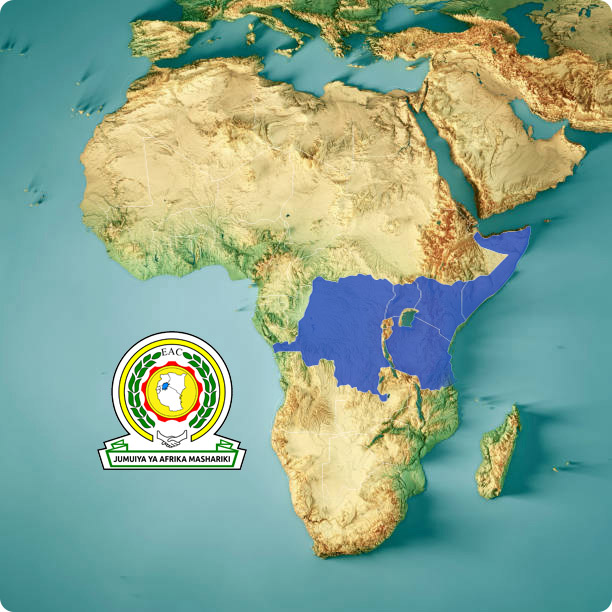
 The East African Community (EAC) is a regional intergovernmental organization of 7 Partner States: Burundi, the Democratic Republic of the Congo, Kenya, Rwanda, South Sudan, Uganda, and Tanzania. East African Community member states are trading more with countries outside the bloc owing to persistent trade disputes and non-tariff barriers (NTBs), which are choking intra-regional trade and undermining the regional integration agenda. Disclosures by the EAC Secretariat through its final draft Trade and Investment Report (2022) show a new trend where member countries are doing increased business with the West African countries, Japan, the USA, India, China, and the United Arab Emirates (UAE).
According to Peter Mathuki, Secretary-General, EAC Secretariat, despite achieving the above integration milestones, intra-EAC trade remains low at 15% in 2022 due to partner states’ imposition of non-tariff barriers (NTBs). The persistence of NTBs continued to affect intra-EAC trade negatively. Nevertheless, efforts have been made to resolve the existing NTBs and encourage partner states to refrain from imposing new ones in line with the commitment under the EAC Customs Union Protocol. As of December 2023, the EAC had resolved 23 out of 33 NTBs.
The seven countries in the region (as of last year) increased their trade with the rest of Africa by $584.6 million to $4.3 billion in the fourth quarter of 2023, a 14 percent rise compared with a similar period in 2022, latest data by the EAC Secretariat shows. Cross-border trade within the region also recorded a 12 percent rise, from the previous year’s $2.6 billion to $2.9 billion in last year’s Quarter 4, an indication of rising trade within the region over the year. During Quarter 3, intra-EAC trade rose 20 percent to $3.2 billion, the highest level recorded within the region in over two years. Similarly, trade with the rest of Africa crossed the $5 billion mark for the first time in two years.
But the region’s trade with the European Union (EU) countries, which traditionally account for about 10 percent of EAC’s total trade, recorded a drop of 14 percent, from $2.04 billion in the three months to December 2022 to $1.7 billion in the last quarter of 2023.
According to the Afreximbank, East Africa has significant export potential to the rest of the continent, estimated at US$12 billion, or around 17.3 percent of the total intra-African export potential. Among the products demonstrating the highest export potential are vegetables, chemicals, tea, ferrous metals, mineral products, food products, beauty products, vegetable oils, rice, and apparel. Together, these products collectively contribute to about 70 percent of the region’s total export potential. While the products with the greatest export potential exhibit similarities across regions, one standout product in East Africa is tea. Kenya, Malawi, and Rwanda are prominent global producers of tea, with nearly 75 percent of their products exported outside of Africa. This analysis suggests that the expanding African market for tea could represent the next frontier for growth opportunities in this sector. As such, strategic investments and initiatives aimed at leveraging the region’s tea production capabilities could yield significant economic benefits and foster regional trade integration and development.
Burundi, Rwanda, Tanzania, and Uganda are covered by the European Union’s, Everything But Arms initiative, under which all products from Least Developed Countries except arms and ammunition have preferential access to the EU market. Together with other sub-Saharan African countries, the EAC Partner States also qualify for duty-free access to the US market under the African Growth and Opportunity Act, except Burundi, whose eligibility has been revoked since 01 January 2016.