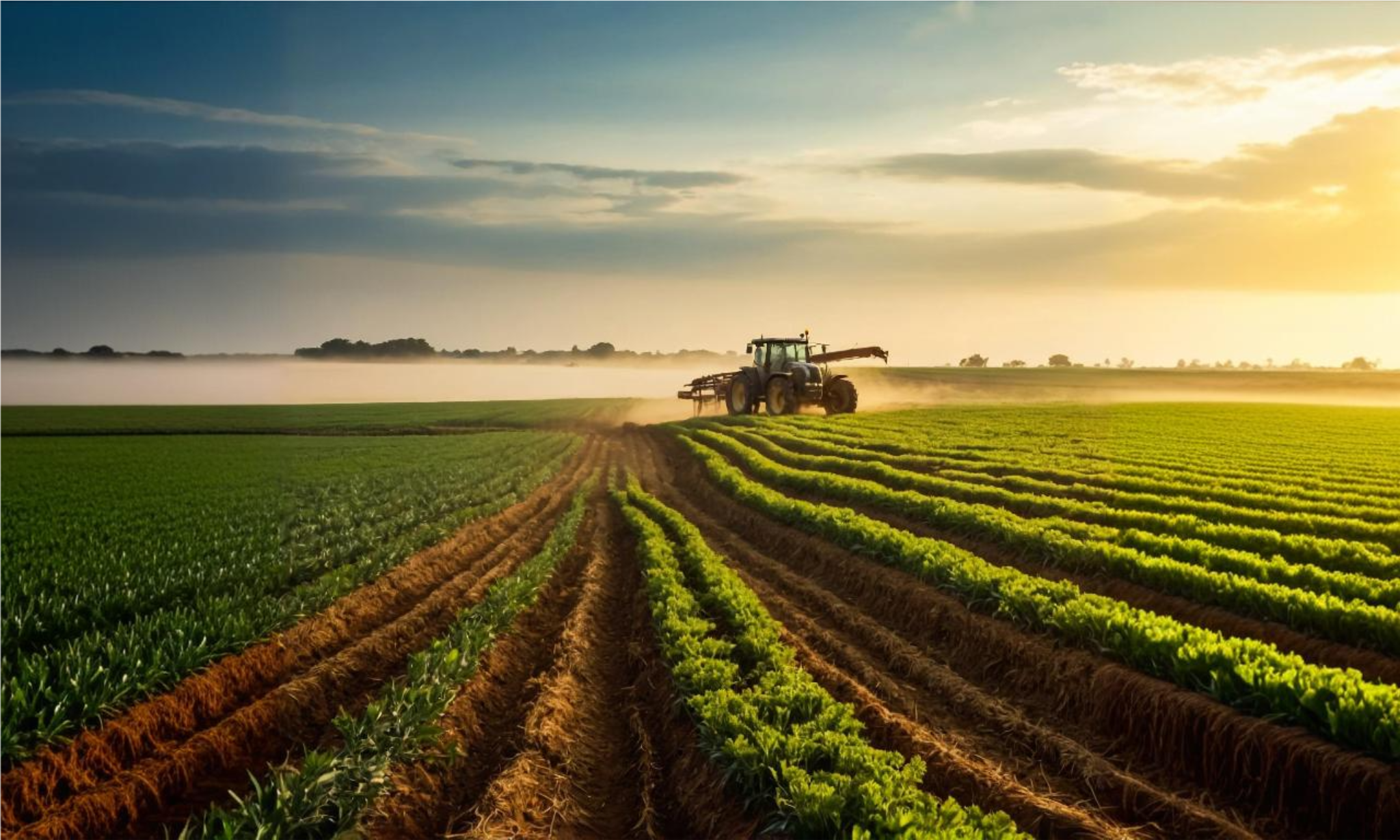
Africa’s economies have mostly been agrarian-based societies since independence. Despite this fact, only 6% of the continent’s land is arable as there are large deserts in North and Southern Africa. Agriculture contributes two-thirds of the continent’s employment and accounts for 30% of the value of its exports. Important agribusiness/ agriculture countries in Africa from the standpoint of the production of export-oriented products include South Africa (wheat and grains, fruits, beef, beverages), Zimbabwe (tobacco, vegetables), Ghana (cocoa, coffee, rubber), Cote d’Ivoire (cocoa, coffee, rubber), Kenya (tea, coffee, silk, cotton), Uganda (tea, coffee, cut flowers), Madagascar (spices), Mauritius (sugar), Mali (cotton), Egypt (cotton), Namibia (cattle); Botswana (cattle) and Tanzania (tea, coffee).
Agribusiness in Africa is a chief priority for development because agriculture has primarily been restricted to subsistence farming, notwithstanding the significant advancements made in food processing. However, Southern African commercial farms have been established in Zambia, Zimbabwe, and South Africa. Inefficient farming techniques such as slash-and-burn and crop-shifting technologies are still predominantly employed in most parts of Africa.
The continent is a top producer of many of the world’s best-loved products, including cocoa from Côte d’Ivoire and Ghana, vanilla from Madagascar, tea from Kenya, and fruits from South Africa. According to the African Development Bank, Africa’s food and agriculture market could increase from US$280 billion a year in 2023 to US$1 trillion by 2030. The agriculture sector in Africa already contributes to 35% of the continent’s gross domestic product (GDP) and employs more than half of the working population.
As much as 59% of the region’s population was employed in agriculture in 2019, with some countries like Burundi and Somalia touching 86% and 80%, respectively. The estimation is that the agribusiness sector (value-added processing of agricultural inputs) in Africa, even at its current, relatively low level, is worth 50% of the overall manufacturing sector in Africa, or 20% of Sub-Saharan Africa’s GDP. As of 2021, Sierra Leone registered the agricultural sector’s highest contribution to the GDP in Africa, at almost 60 percent. Chad and Ethiopia followed, with agriculture, forestry, and fishing accounting for approximately 54 percent and 38 percent of the GDP, respectively. On the other hand, Djibouti, Botswana, Seychelles, and South Africa were the African countries with the lowest percentage of the GDP generated by the agricultural sector.
Despite the significant variations across countries, agriculture is a key African sector. In 2021, it represented around 17 percent of Sub-Saharan Africa’s GDP, growing by roughly two percent compared to 2011. The agricultural industry also strongly contributes to the continent’s job market. The number of people employed in the primary sector in Africa grew from around 197 million in 2011 to 226 million in 2021. In proportion, agriculture employed approximately 44 percent of Africa’s working population in 2020. Agricultural activities attracted a large share of the labor force in East and Central Africa, which registered percentages over the regional average. On the other hand, North Africa recorded the lowest share of employment in agriculture, as the regional economy relies significantly on the industrial and service sectors.
The African agricultural economy is the fastest growing across all continents: it has witnessed a 4.1% growth from 2000-2020 compared to 2.7% worldwide, with East Asia and Pacific at 3.5%; Latin America at 2.6%; and South Asia at 3.0%. According to the Afreximbank, agricultural commodities posted contrasting performance between the first and second half of 2022. After the strong commodity price tailwinds from the Ukraine conflict in the first quarter of the year, the agricultural commodity market weakened during the second half of the year, driven by marked price declines in palm oil, cotton, wheat, corn, coffee, and cocoa.
By 2050, the food industry in Eastern and Southern Africa is expected to see an 800% increase in food value, and trade in processed foods could increase by up to 90%. Africa will be a $1 trillion food market by 2030, with consumption in cities driving the demand for more products.
The communal landholding structures of many African communities also have precluded the aggregation of land for the development of more technology-intensive, higher-yield producing farms. Furthermore, little investment in improved technologies has been made without land tenure. Many nations on the continent have pursued strategies to increase crop yields amongst smallholder farmers by introducing different varieties of planting materials and seeds, increasing the use of insecticides and mineralized fertilizers, and promoting mechanization (tillers, tractors, etc.).
Access to good quality seed has played a critical role in accelerating the transformation of agriculture in many countries. The supplying seed indicator looks at laws and regulations supporting the timely seed release for use by domestic farmers. It includes the time it takes to register a new variety, registration costs, and other data points that assess good practices that promote transparency and efficiency of variety release processes.
Regarding local production relative to agriculture and agribusiness activity, Africa produces the big four: grains, corn, wheat, and rice in abundance in concentrated regions. Corn is the most widely produced product grown in almost all African regions. Egypt and Mauritius are known to produce the highest yields per acre. The African maize Market size is estimated at USD 41.40 billion in 2024 and is expected to reach USD 57.26 billion by 2029, growing at a CAGR of 6.70% during the forecast period (2024-2029). According to USDA reports, maize production in Africa increased by almost 8.2% from 2017 to 2022, estimated at 90.8 million metric tons. The total harvested area under maize in the region was around 43 million hectares in 2020.
Rice has become a significant staple in Africa’s urban areas, and as such, demand and production have also risen significantly over the past decade. Millet and sorghum are also produced, but principally in the savanna region. Rice production and consumption have become increasingly important and are associated with areas of rapid urbanization. According to CGIAR, between 2000 and 2020, the harvested area increased from 6.9 million ha to 16.6 million ha, whereas the gain in rice yield was limited, only increasing from 1.7 to 2.1 t/ha. Recent yield levels are still much lower than the global average, which is around 4.8 t /ha. The most important rice-producing countries are located predominantly in West Africa – Cote d’Ivoire, Liberia, Guinea, Liberia, Mali, Nigeria, Senegal, and Sierra Leone. In other parts of Africa, Egypt, Madagascar, and Tanzania are also important rice producers.
Wheat production in Africa has increased steadily at a rate of 0.52 million tons per year (Mt yr−1) since 1980 to nearly 25.2 Mt in 2020. Wheat imports are particularly high for countries in Northern Africa, responsible for 59% of Africa’s wheat import bill, followed by Western (19%) and Eastern African countries (14%; FAO, 2021). Wheat production has spread across the savanna region of Africa, including parts of northern Nigeria. It is most actively produced in Southern (particularly South Africa) and North Africa and upcountry in Kenya and Ethiopia in Eastern Africa. Animal husbandry is also a very important activity across Africa. However, the maximization of using animals to farm is thwarted by the fact that historically cultivating communities in Africa (Kikuyu in Kenya, Hausa in Nigeria) have not lived alongside herdsmen (Maasai in Kenya, Fulani in Nigeria).
Coffee prices soared to decade highs of US$2.50 per pound during the first half of 2022 as bean shortages rattled the global coffee market. Adverse climate events exacerbated supply chain turmoil and logistics complications that emerged from the pandemic. Drought and frost in 2021 damaged the Arabica coffee plants in Minas Gerais, the top-growing region of Brazil, and ruined the beans that were ready for harvest. Supply and demand imbalances affected cocoa prices, triggered by several factors. Flash floods in West and Central Africa and a dock workers’ strike in Côte d’Ivoire negatively affected cocoa bean transportation from farms to ports. The International Cocoa Organization reported a decline of 23 percent year-on-year in port arrivals, from 452,000 tons to 348,000 tons as of November 2022. The elevated cost of inputs and the outbreak of black pods in some cocoa-growing regions also squeezed production. As a result, prices spiked to about US$2,600 per ton during the last quarter of 2022, up 18 percent from US$2,200 in July.
According to an analysis by Aceli Africa of 31 agri-lenders, 75% of lending to agri-SMEs in East Africa comes from commercial banks. Some banks focus on small, short-term loans of between US$10k – US$100k, while others have moved to corporate lending advancing between US$50k to US$500k. However, bank lending to the sector is far from optimum and only reaches a fraction of the market, as the banks analyzed only had 8% of agri-SME lending in their portfolio. Some non-bank financial institutions lend between US$10k – US$100k as short-term working capital facilities, but lending by these institutions is minimal. Global social lenders also play an active role in agri-SME lending, although they advance fewer loans than commercial banks. They provide between US$150k to US$1M+, mainly for working capital needs by SMEs. Several respondents reported having accessed grant funding for their businesses.
The need for catalytic financing for the entire agricultural value chain and not just technology also emerged as a top priority, moving two places up from overall position 5 in 2020 to position 3 in 2021. This corresponds with the need to expand the entire operations of companies as opposed to only increasing technology. In addition, companies want blended finance initiatives and not only one form of financing. This priority moved 7 places up in the 2021 survey from overall position 11 in 2020.
Food security declines by 5–20% with each flood or drought, while the region experiences about a 1.4% reduction in food calories per year from key food security crops. The Horn of Africa is set to miss its 5th rainy season in a row, making it the worst drought in 40 years, and South Sudan is facing record-breaking rains and floods for a fourth consecutive year as the climate crisis accelerates. In South Sudan, nearly 75% of the population is dealing with severe food insecurity. In northern Ethiopia, civil conflict has presented an added obstacle to commercial and humanitarian relief efforts, where nearly 20.4 million people need food assistance. In Kenya, approximately 3.5 million are facing either an IPC Phase 3 crisis or IPC Phase 4 emergency in 2022, representing a 10% increase from 2021. In Somalia, nearly half of the population faces acute food insecurity, including over 1.5 million children under five years. In the final months of 2022, about 213,000 Somalians faced a catastrophic IPC Phase 5 famine.
While farmers were still struggling to recover from the socio-economic repercussions of the Covid-19 pandemic, the Russia-Ukraine conflict posed another major threat to the global economy. African countries were directly affected, especially the farmers who depend on agricultural inputs from these countries. Regarding fertilizer production, Russia accounted for 15% of world exports in 2020 and was the top exporter of nitrogen fertilizers, second in potassic fertilizers, and third in phosphorus fertilizers.
Russia is also among the biggest fuel oil suppliers in the world. Following the war, the importation rate of fuel oil has reduced, causing an increase in the price of fuel globally. As a result, it has increased transportation costs for farmers, reducing their incomes and profits. The ripple effects include raising goods prices, which few people can afford. Many African Farmers are no longer using fertilizer because the prices have doubled.
“It is estimated that for every 10% increase in agriculture production in Africa, there is a corresponding 8% decrease in poverty among smallholder farmers,” says Fredrick Kiio, head of programs for agribusiness at the non-profit African Enterprise Challenge Fund. He notes that while there increasing production should clearly be a priority for governments, it “only makes sense” for farmers to invest in increasing output if agri-processing infrastructure is available. Kiio adds that the first step to boosting food production is to ensure that basic infrastructure is in place. This includes expanding road networks to enable farmers to get their produce to markets. Almost half of Africa’s rural population must travel at least five hours to reach the nearest market, according to a 2022 UN report.
While African governments are committed to tripling intra-African trade in agricultural commodities and services by 2025 as part of the 2014 Malabo Declaration, the aspiration is far-fetched as this kind of trade continues to dwindle from its peak in 2013 to less than 15 percent in 2022. However, if fully implemented, the African Continental Free Trade Area (AfCFTA) could raise household income by 9% by 2035 while lifting 50 million people out of extreme poverty. Africa could see foreign direct investment increase by between 111% and 159% under the AfCFTA.
To stimulate increased value-added production and improvement in the technologies employed in Africa, institutions such as the World Bank and African Development Bank have been introducing the concept of ‘Agro-food Systems Development’ in several countries in Sub-Saharan Africa. The primary aim of Agro-food Systems Development focuses on auxiliary farm services. This addresses two main challenges which impede the growth of agriculture on the continent, namely a) the lack of growth in the areas of market access, market development, sector investment, and processing capacity, and b) the need for increased productivity via technology transfer, greater access to inputs, research, and information. Given the strong need for food security, job creation, and optimal land utilization, the focus on improving agricultural techniques /technology and agribusiness development plans over the medium to long term can assist with this.
The African Union Development Agency, NEPAD, launched the Comprehensive Africa Agriculture Development Programme (CAADP) to support agricultural development. Important partners and stakeholders in implementing the CAADP initiative include the United Nations FAO, the World Bank, AfDB, International Fund for Agricultural Development, and the World Food Programme.
The CAADP was formed in 2003 and was established to address four key issues:
- Land and water management,
- Infrastructure and market access,
- Food supply and hunger reduction;
- Agricultural research and technology dissemination and adoption.
At the 2019 Tokyo International Conference on African Development (TICAD), the United Nations Industrial Development Organization (UNIDO) and the Food and Agriculture Organization of the United Nations (FAO) officially launched a joint program named “Opportunities for Youth in Africa (OYA): Accelerating job creation in agriculture and agribusiness,” to accelerate efforts in the area of job creation for African youth, especially through agribusiness and entrepreneurship development.
Main Agricultural Commodities
Fruits and Vegetables:
Bananas, pineapples, dates, figs, olives, citrus fruits, onions, and tomatoes grow in most tropical belts that straddle the equator. Key fruit production countries include Angola, Congo, Cote d’Ivoire, Kenya, Somalia, South Africa, Tanzania, and Uganda. Dates, figs, and olives are predominantly found in Mediterranean climates such as Libya, Tunisia, Sudan, and Egypt. Citrus production is greatest along the northern coastal regions in North Africa.
Cassava, Potatoes, Yams, Plantain:
These crops are primarily grown in West Africa but are also found (primarily for consumption purposes in countries such as the Democratic Republic of Congo, Kenya, Madagascar, and Ethiopia. In the more moderate climates of North Africa and Southern Africa, tubers are also being grown. Plantain is a popular staple crop produced in the tropical regions of Central and West Africa.
Cocoa and Coffee:
Cocoa is produced primarily in tropical West Africa, particularly Cote d’Ivoire, Ghana, Cameroon, and Nigeria produce high volumes of the crop. Coffee is also grown in the Central and East African highlands: Cameroon, Congo, Cote d’Ivoire, Kenya, Madagascar, Tanzania, Rwanda, Uganda, Malawi, and Zimbabwe.
Cotton, Sisal and Kenaf:
Fibre products are also important commodities produced for textile manufacturing throughout the continent. Cotton is produced in Mali, Egypt, Zimbabwe, and Sudan. Sisal is used for making string and rope and is produced in large quantities in Angola, Kenya, Madagascar, South Africa, and Tanzania. Kenaf is an excellent fiber from a tree that produces fiber that can be used to make paper.
Cashews, Coconuts, Kola Nuts, Pam Nuts:
Cashews are produced along the coast of West Africa and in various regions of East Africa, particularly in Cote d’Ivoire, Guinea Bissau, Mozambique, and Tanzania. Coconuts are produced primarily in Comoros, Cote d’Ivoire, and Ghana. Kola Nuts are primarily grown in West Africa, Ghana, Nigeria, Cote d’Ivoire, Liberia, and Sierra Leone. Palm Nuts are widely produced in the tropical region. The nuts are processed to make oil. Large palm plantations exist in Cote d’Ivoire, Congo, and Nigeria.
Sugar Cane and Rubber:
Sugar Cane is grown in many countries across Africa. Egypt, South Africa, Mauritius, and Sudan are the leading countries growing the commodity. Rubber is found in a smaller range of countries but predominantly in Liberia and Nigeria.
Cattle, Goats, Ostrich, Poultry, and Sheep:
Livestock keeping in Africa is predominantly comprised of cattle, goats, sheep, and poultry. Cattle are primarily raised for meat and milk, while sheep are raised in Northern and Southern Africa for wool. South Africa produces more than 50% of the continent’s wool.
Poultry:
Poultry production exists almost everywhere on the African continent, although Ethiopia, Morocco, Nigeria, South Africa, and Sudan are countries with the greatest level of activity. Namibia, South Africa, Botswana, and Zimbabwe have a growing contingent of ostrich farmers.
Fish:
Africa has abundant oceanic and freshwater resources. The continent has significant inland waterways, and 38 of the continent’s 55 countries have access to the ocean. Fishing is a very important activity all over Africa. However, commercial fishing on the continent’s oceans is not practiced universally. Key countries where fishing forms a prominent part of economic activity include Angola, Ghana, Morocco, Namibia, Nigeria, and Senegal. Countries with well-developed inland fisheries include Chad, Cote d’Ivoire, Mali, Malawi, and Uganda.